The importance of Mobile Marketing for Brands

Consumers have a strong relationship with mobile devices because they empower freedom while maintain the user completely connected. There isn’t a single day that passes by without checking the mobile phones regularly — even if it’s only to see if there’s a new notification or to check the time. (Hopefully with the new iWatch we’ll stop using our phone to check the time).

Mobile phones are no longer just communication means and started to become distribution channels. Mobility became the status quo of attention span from consumers, creating an opportunity for brands to be nearer the mind and hearts of their target audiences.

With mobile marketing, a brand creates access for its own content, asking the consumer for permission to receive that same content. “Mass marketing”, however, involves “permission marketing”, which requires personalized information that comes with a counterpart: a commitment and investment (too high) to match consumers’ high expectations on quality content and the ability to scale.

Considering the mobile context, there is a shift on consumer’s habits, motives, and consumption that changes the focus from the product to the consumer because ultimately it is he that decides to share or to be contacted by brands. Luckily, with mobile marketing there are many ways to engage consumers, such as push notifications, messaging, e-mail, passbook campaigns, apps and social media. However, in order to do so it must always be highly relevant because we’re talking about a media that is much more personal and intimate. One that stands in a world where the attention time frame is very short. Also, it has to be thought as a strategy and not just as a communication plan that uses mobile marketing as a mean because competition in the mobile context is for interested attention. With the stimulus that populates the audience’s mind the goal is to fulfill consumer’s goals at specific moments.

46% of consumers think that brands don’t provide relevant content and 54% think that mobile websites just aren’t enough. However, they all agree that it is easier to find information. Why does this happen? Despite what you might think, it’s not about what mobility allows you to do – which is to provide information at any given time and moment to any consumer – it’s about what it means: the ability to move or be moved freely and easily. Adaptability. Flexibility. Versatility.

The ability to move or to be moved:
In order to engage with a consumer a brand must know how to be the most relevant, especially if we live in the Era of “2-Second-Attention” generation. Every second is a chance to engage and it only takes a glance to be on top of mind or to be ignored. The consumer needs to be moved by the brand while he has the freedom to be on the move and to feel that particular bit of information is going to change his life.

Mobile marketing is redefining commerce and retail:
In the end, the biggest challenge for a brand is to know how to manage all this scalable messaging into a sustainable relationships — in a time where mobile marketing control depends on the consumer — while keeping its own identity and maintaining a personal 1:1 connection (which makes every marketing strategy even more fleeting).

Nevertheless, it’s possible. And an amazing opportunity.
A brand just needs to know how to use the right channels for this new “opt-in” consumer and to understand what is the exact content consumers’ look for to be relevant for them.

Why now is the right time to incorporate digital wallet passes in to your marketing plan

Get ahead of the game and take advantage of the huge marketing opportunity that digital wallets have to offer. That’s definitely the message if the recent roll out by major companies of digital wallet and iBeacon technology is anything to go by.

We’re rapidly expanding towards a future where smartphones will be even more inextricably linked to every aspect our everyday routines. Current consumers desire more channels to access brand’s content and require fast, convenient ways to do it.

The non-payment side of digital wallets such as Passbook and Google Wallet is still nascent in terms of brand adoption, but as smartphone users are becoming more in sync with its functionalities brands should look to move their tickets or coupon and loyalty campaigns to more dynamic digital smartphone versions. Companies such as Starbucks, Major League Baseball and American Airlines have been leading the change to digital wallets and reaping the benefits as a result.

Digital wallets form an important part of the current trend of new mobile technologies which are all focused on creating unique and innovative experiences for customers whilst paving the way for a more seamless transition between the physical and the digital worlds.

Real-time communication channels such as iBeacons are challenging brands to give more relevant information to their customers and provide opportunities to influence consumer spending whilst in-store.

iBeacons are set to play an important role in all brand-to-customer interactions in the near future, especially for retail stores in the fight to win back market share from online competitors with digital wallets at the forefront.

The benefits of Apple Passbook for brands

Passbook offers brands a significant opportunity to drive engagement with customers and increase store foot traffic through one convenient app.

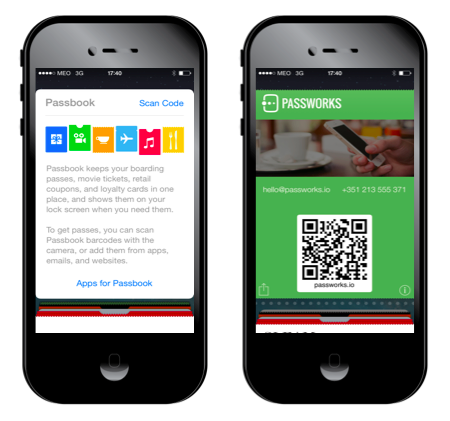
Passbook is an app native to Apple devices, pre-installed on all operating systems that run iOS6 or later. The essential premise is one place to store coupons, event tickets, loyalty cards and the like, but more than just being a digital wallet, it also represents huge marketing potential for brands.

The fact that Passbook is a default app means a target audience already exist that are accustomed to using it. As an example, in the US Passbook is already the 4th most popular mobile commerce app and a fifth of all iPhone users already use it to download coupons. Furthermore, with over 300 million iPhones around the world and all future devices set to have Passbook installed, the wide range of users that brands can reach is vast.

The convenience of having all a wallet’s non-payment aspects in one app is beneficial to both brand and customer. For example, the easier access to both coupons and loyalty cards allows brands to offer their customers a seamless interchange between the two whilst increasing sales and providing better customer service.

Location-based notifications enhance the dynamic features of a Passbook pass allowing brands to send updated information to their customer’s phone via push notifications, which highlights the potential to refine marketing strategies with more personalised, relevant offers. Apple’s iBeacon technology has already paved the way for geolocation to play a key role in brand to customer interaction.

Incorporating Passbook passes into a brand’s existing mobile marketing strategy has been shown to boost sales and increase coupon conversion rates, with 64% higher conversions compared to regular mobile web coupons. It also provides a totally different platform to a brand’s app, as consumers don’t want to fill their phones with apps for every different shop or restaurant, and require a simpler, more expedient way of utilising their smartphone whilst in-store.

Crucially for smaller brands, Passbook doesn’t need an app to work alongside it, as passes can be added straight to it via email, SMS or distribution campaigns in social networks. This opens up the barriers to entry, enabling brands with smaller resources to have a cost-effective way to offer their customers mobile content and drive up sales.

Passworks platform enable brands to create a pass, manage and distribute a marketing campaign that may take the form of digital coupons, membership or loyalty cards, and events or travel tickets, via Apple Passbook.

The rise of mobile wallet marketing opportunity

In recent years, we have seen the rise of mobile payments and how they been changing the way customers and businesses interact. From PayPal, Google Wallet, Square, Isis and passing on to Visa and MasterCard, everyone has been focusing on driving mobile payments, improving and transforming the way people shop and pay.

Only more recently, have the mobile wallet non-payment features started to emerge. Primarily with the launch of Apple Passbook, and later with the new updated version of Google Wallet, mobile wallets have been redesigned to meet the needs of brands in delivering compelling content to consumers on their smartphones via the use of dynamic passes (such as digital coupons, loyalty cards, boarding passes, event tickets and others offers), push notifications and real time location based messages. Taking advantage of these features has become fundamental in the industry in allowing brands and retailers to communicate more effectively, while giving consumers an easier way to organize their items in one place.

This is a huge, and very real opportunity for brands and retailers to communicate and further build relationships with their customers. These new functionalities allows to easily send personalized offers, distribute passes which drive store traffic and increase both conversion rates and consumer loyalty and enabling a very cost-effective location-based marketing campaign.

At the end, brands and retailers can start exploring the emergence of mobile and social platforms as an opportunity to increase share of mind and share of wallet to create an interconnected and seamless experience between mobile and the shop floor.

Consumers have already made it clear they want a mobile wallet solution that gives them a seamless experience while helping to better organize all their shopping-related information, thus creating a better, more convenient overall shopping experience.

No longer do consumers need to carry all their paper coupons or plastic cards when shopping, traveling or going to an event. Instead, they can place their coupons, offers and cards in the mobile wallet and let the technology work for them. They can also be reminded of offers when close to a retail store or when a certain offer is about to end with a push notification that will appear on the screen of their smartphone.

Mobile is the ultimate and effective form of custom media because it is personalized and contextualized to the consumer. This is why it is important for marketers to create personalized and contextualized, relevant content based on their client profile. And if used properly, Google Wallet, Apple Passbook or other mobile wallets are effective solutions for brands to leverage customer acquisition, engage with consumers and drive traffic to their store. Nevertheless, these mobile wallets are not brand or retailers friendly in a way that is easy for the marketers to create offers or vouchers, design campaign and distribute them their target consumers.

Passworks is a new best in class solution for brands and retailers, that enables effective customer acquisition and strong engagement that drives store traffic. It’s an integrated solution for mobile marketing campaigns management using Software-as-a-Service (SaaS) or an Application Program Interface (API) to create engagement mobile wallet campaigns.

With Passworks’ marketers can design their dynamic passes (digital coupons, membership cards, loyalty cards, event tickets, travel tickets), create the respective marketing campaign, choose a profile target, define location-based notifications, and distribute them directly to customers´ phones of all major mobile platforms via Apple Passbook, Google Wallet, Windows Phone Wallet and other their parties Apps through integration with social networks among other channels.